
When a Check-In Line Tells You the Truth
Picture this: a Monday rush, a lobby that hums, and three guests trying to talk at once. Reception Desks can make that scene feel calm or chaotic in seconds. Studies and field audits often show that people decide how they feel about a space in under 7 seconds, and the first touchpoint is the counter (no pressure, ¿verdad?). So here’s the question—are we shaping the front desk to guide flow, or to fight it?

I’ve seen teams add staff, post signs, even tape arrows on the floor. Yet lines still stall, voice levels rise, and privacy drops—funny how that works, right? The weak link is not always the people. It can be the geometry, the reach zones, the glare off the work surface, even the noise bouncing from hard finishes. Add real limits like ADA compliance and a basic queue management system, and the picture gets clear. The desk is doing more than greeting; it is a throughput device. When it fails, time and trust leak out. Let’s dig deeper and compare what shape, tech, and small changes can do next.
The Hidden Friction Inside a U-Shape
Why do “good-looking” layouts still cause jams?
Let’s get direct. A u shaped reception desk looks like a control center. It promises access on three sides and strong eye contact. But the same openness can trigger cross-traffic and split attention. Agents swivel more. Guests approach from odd angles. And each pivot adds seconds to service time. In technical terms, the U creates more handoff points and more interruptions. Cable management channels help, but stray chargers and power converters still creep out and block knee space. If you mount tablets, edge computing nodes under the counter may warm the bay and nudge staff to stand off-axis. Look, it’s simpler than you think: every extra reach and turn reduces throughput.
There are other hidden pain points. The inner corner of the U becomes a catch-all for parcels, which expands the clutter zone. ADA knee clearance gets tight when trash bins or portable printers slide in. Modular millwork sounds flexible, yet poorly planned cutouts can pinch airflow for LED drivers and routers. Acoustics? The U’s hard “arms” bounce sound back to the center, so voices overlap and privacy drops. Even a low-cost fix like antimicrobial laminate won’t help if guests lean across the same hot zone all day. The result is fatigue for staff and small delays that add up.
Comparative Outlook: Tech That Rewrites the Front Desk
What’s Next
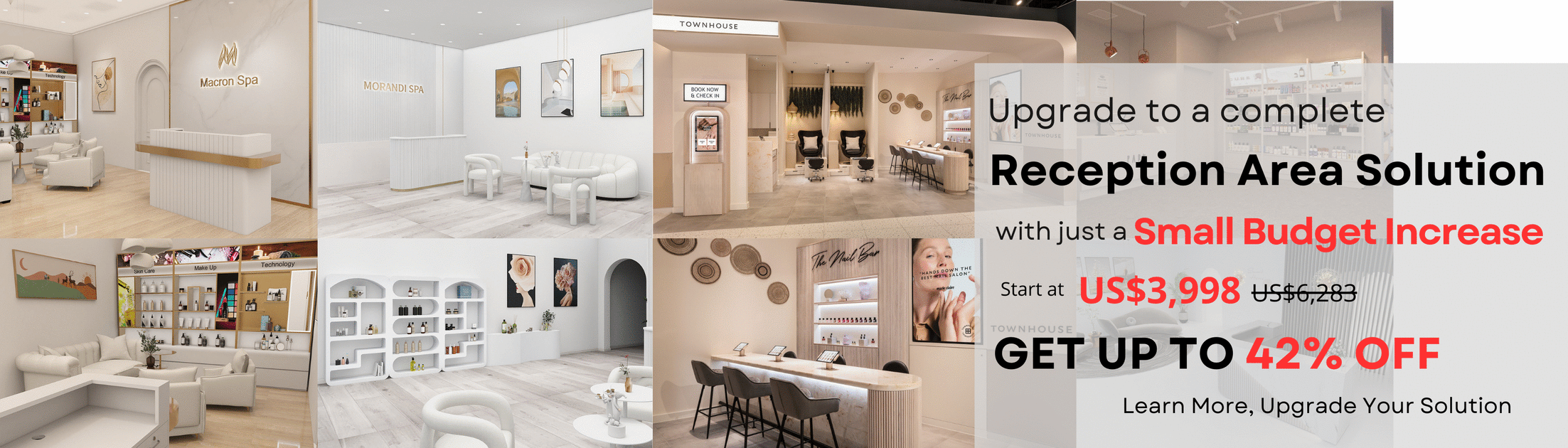
Now let’s look ahead—comparative and practical. A smarter path blends layout tweaks with light tech. Start by treating the counter as a mini operations hub, not just furniture. Low-power sensors can track approach angles and dwell time, while edge computing nodes summarize flow without cloud lag. That means the U can be tuned: one arm becomes a quick-drop lane with clear ADA clearance; the center becomes the main service point with a modest privacy screen; the far arm becomes a self-check pod using RFID check-in. In tighter spaces, a small reception desk can outperform a big U if the line faces forward, the task lighting cuts glare, and the load-bearing frame keeps tech cool and quiet. Add a simple cueing light and good cable grommets—done.
We can also imagine a near-future setup where footfall analytics, not guesswork, set staffing. LED drivers dim when nobody is near. The system logs cycle times and flags bottlenecks by hour (and yes, that is possible today). It is not about buying more desk. It’s about matching shape to flow, and tech to moments. Quick summary: U-shapes win for multi-station teamwork and document handling; compact counters win for speed and clear lines of approach. To choose well, use three metrics. One: throughput per square meter across peak hour. Two: average interaction time with ADA and privacy considered. Three: lifecycle cost per visitor, including rework on wiring, ventilation, and surface wear. For deeper reading and vendor benchmarks that map to these metrics, see M2-Retail.
