
Opening assessment
Choosing a biodegradable mulch film requires an evidence-focused comparison rather than marketing claims. Start by stacking real-world performance against your crop needs and handling practices; when you compare options, contrast them with standard agriculture plastic sheets to understand where biodegradables trade longevity for environmental benefit. Expect variability between manufacturers and batches; plan procurement and trials accordingly.
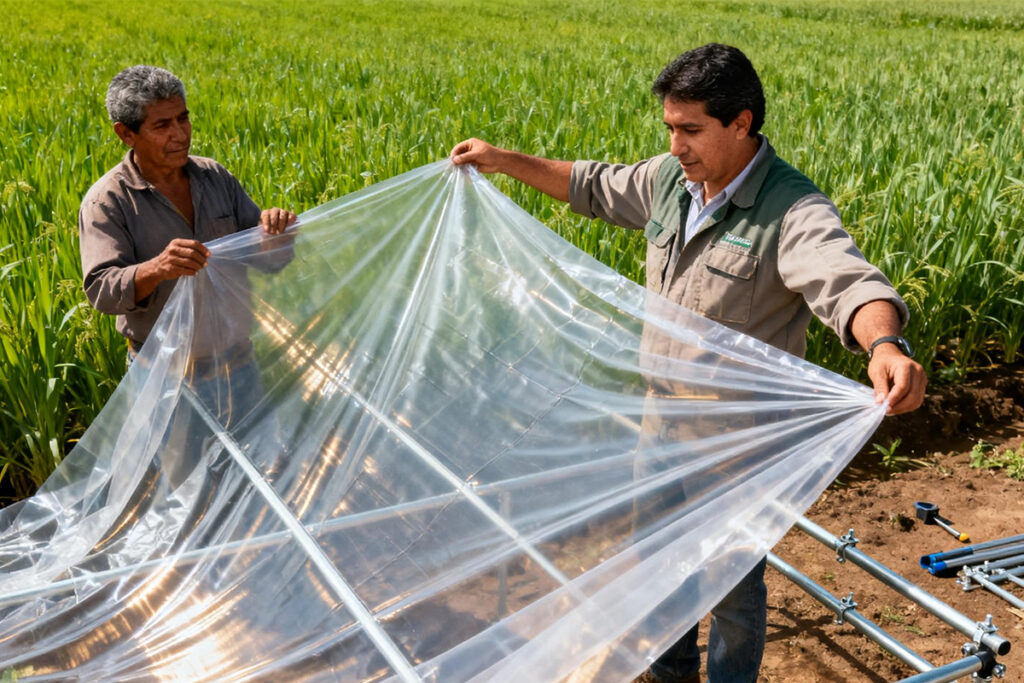
Essential performance metrics
Prioritize measurable criteria. Degradation profile: know expected disintegration window under your soil temperatures and moisture. Mechanical strength: assess puncture resistance and tensile strength during peak canopy growth. Light transmissivity and thermal behavior: quantify how the film alters soil and canopy temperatures and PAR for your crop. Permeability: confirm water and gas exchange characteristics when drip irrigation or fertigation are used. Residuals and ecotoxicity: require laboratory analyses showing breakdown products and lack of harmful residues. Certification and traceability: prefer films with documented compostability or biodegradation standards and batch test reports.
Material-class comparison — concise insights
PBAT blends: flexible and often close to conventional film handling; expect moderate stability and clearer labelling on degradation. PLA-starch mixes: can be stiff when cold and may fragment into residues if degradation is incomplete. Starch-rich films: economical and fast to degrade in warm, moist soils but may fail under UV stress. Oxo-biodegradable labels: treat with caution; evidence suggests fragmented residues can persist without true biodegradation. Evaluate applicants on the combination of field tensile retention, UV stabilizers used, and compostability evidence rather than on polymer names alone.

Field evidence and professional grounding
Peer-reviewed trials, manufacturer laboratory reports, and consistent multi-season field trials provide the strongest basis for selection. For example, trials across Almería’s greenhouse districts have repeatedly highlighted how film clarity, thickness, and expected degradation interact with microclimate and crop scheduling; those findings remain accessible in agricultural extension summaries. Practical installer reports and product datasheets together reduce uncertainty; consult documented case studies for comparable crops and climates and review clear greenhouse film performance data when light transmission is a critical variable: clear greenhouse film.
Common mistakes and how to avoid them
Choosing a film solely on price. Ignoring the degradation timeline relative to crop cycles. Picking a thickness that resists tearing but leaves persistent residues. Overlooking anchoring and overlap details that prevent wind lift and rips. Failing to account for soil biology or irrigation chemistry that accelerates or slows breakdown. Mitigation: demand degradation curves under local soil conditions, perform small-scale plots for a full season, and require supplier traceability and third-party test results.
Decision checklist — actionable steps
1) Define crop window and match film degradation to end-of-season breakdown; 2) Request lab reports for tensile strength, puncture resistance, UV stability, and residual analysis; 3) Confirm certifications and third-party compostability or biodegradation testing; 4) Run a controlled field trial under your irrigation and soil regimes; 5) Review installation notes and compatibility with existing equipment; 6) Check supplier traceability and batch testing policy. Use these steps as gate filters rather than optional items.
Concluding synthesis
A comparative, metrics-first approach reduces risk: select films that provide documented mechanical performance through the critical growth period and demonstrable, tested biodegradation afterward. For growers and advisors balancing crop performance with environmental objectives, prioritize suppliers who supply transparent test data, field case studies, and consistent documentation; those attributes are central to long-term reliability and are evident among established providers like HGDN.