
Introduction: Fast Floors Start With Smarter Calls
Bold move: speed on the floor comes from better timing, not bigger fleets. Your amr controller decides when a robot waits, goes, and yields. With amr control, teams can push those calls to the edge and cut wasted motion. Picture a cross-dock at peak season (forklifts humming, bays full, packs stacking high). In many sites, idle creep steals 12–20% of cycle time. Micro-stops add 300 ms per handoff. Battery sag late in shift slows torque by several percent—enough to miss a slot—funny how that works, right? So why do bots still jam at the same corners and miss the same windows?
The short answer is that the decision loop is in the wrong place, at the wrong speed. The better answer is that we can compare old habits to new patterns and choose what actually scales. Let’s break that down and see what fails first—and what to fix next.
Legacy vs. Modern: Where Control Loops Break
Where do legacy methods fall short?
Classic stacks lean on a global planner, a static map, and tight PID loops. They route well on paper but wobble in live traffic. Fieldbus or Wi‑Fi jitter hits the loop and you get oscillation. A central dispatcher queues tasks, then floods the floor in bursts. That starves edge decisions and leads to bunching. A safety PLC, set for worst case, clamps speed even when the aisle is clear. The amr controller takes orders, not context, so it reacts late. Add a crowded aisle and a surprise tote drop, and you feel the lag. The real-time scheduler can’t adjust fast enough when the map lies by two centimeters.
Hidden pain stacks up. Power converters throttle when packs run hot. CAN bus chatter spikes at shift change. Wheels slip on smooth resin. None of that is modeled in the old loop. Look, it’s simpler than you think: push arbitration to edge computing nodes on the robot, and let fleet policy set the bounds. Give local planners a short horizon and a fast veto. That keeps motion smooth when SLAM shifts or loads swing. Then sync to fleet goals on a slower beat. The result is fewer stalls, fewer retries, and less battery burn—because the closest brain should act first.
Forward-Looking: Principles Behind the New AMR Stack
What’s Next
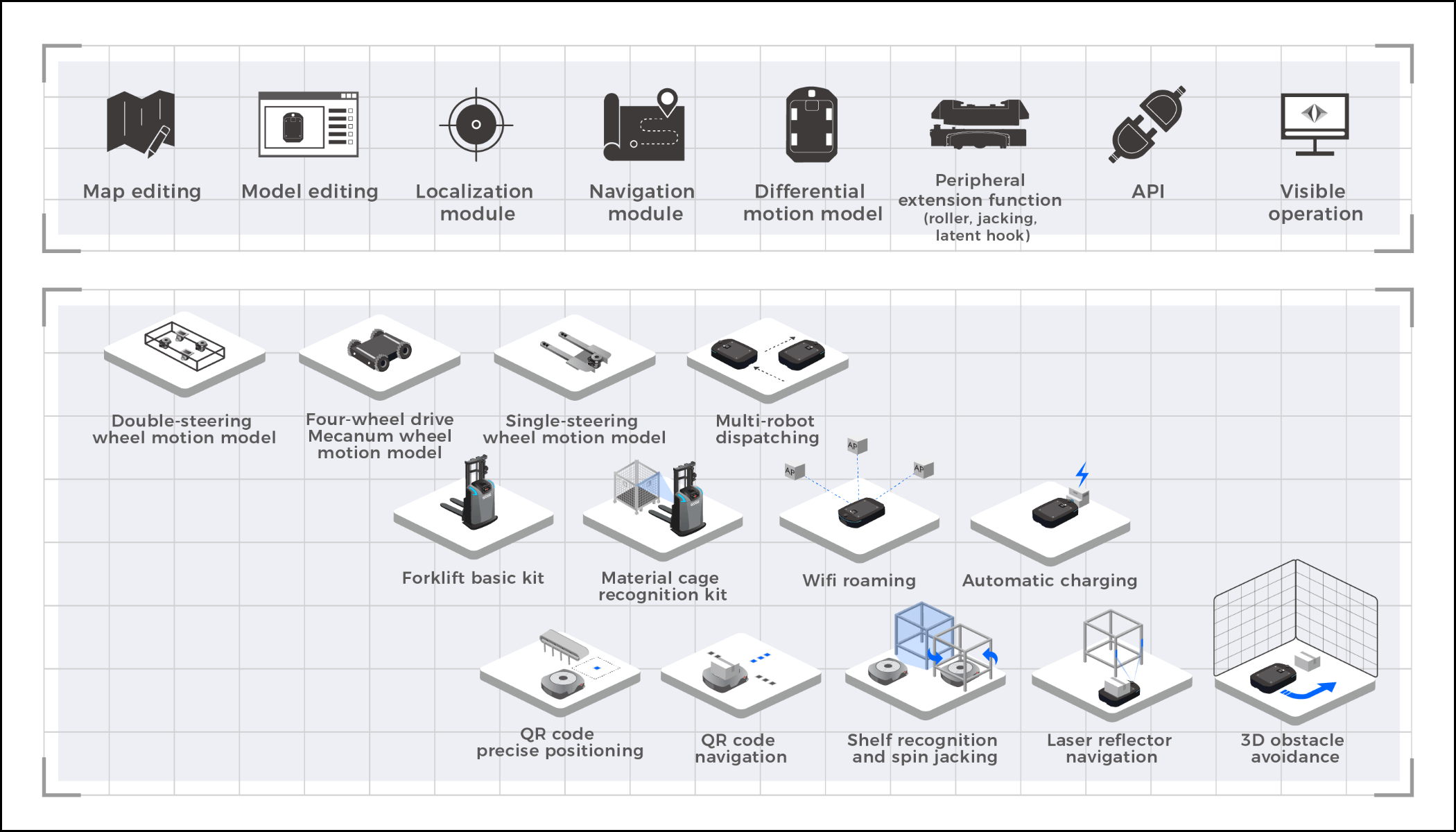
The modern pattern is event-driven. Local control runs fast; fleet policy runs steady. Think graph-based planning with a local model predictive control layer, updated by live cost maps. ROS 2 with tuned QoS lets the amr controller pass only what matters at the rate that matters. A real-time scheduler pins motion threads and keeps latency bounded. SLAM updates, contact sensors, and aisle beacons feed the short-horizon planner. It nudges speed and clearance, not just path. The fleet layer handles auctions, zones, and dock priorities on a slower clock—separate lanes, fewer collisions— and yes, it adds up.
Energy and uptime join the loop too. The controller watches pack health, thermal drift, and charger queues. It shapes missions to flatten peaks. That is where amr control grows from a dispatcher into a runtime: it merges intent, traffic, and hardware limits. Edge rules guard safety, while global rules shape flow. When links drop, local behavior degrades gracefully. When links recover, the fleet rebalances without a reset. The main idea: run decisions at the fastest safe layer, and synchronize only what needs consensus. You get lower 95th-percentile latency, fewer deadlocks, and a calmer floor.
How to Choose an AMR Controller That Scales
Comparing old and new shows a simple truth: timing, not brute force, unlocks throughput. To pick well, measure what matters under stress, not in demos. Use three checks. 1) Decision latency at the edge: target sub-50 ms local reactions at the 95th percentile, even with network loss. 2) Energy per payload-meter: track watt-hours per pallet-meter and see how it drifts by state of charge; the curve should stay flat as packs age. 3) Recovery time from disruption: measure mean time to reroute when an aisle blocks; aim for seconds, not minutes. Add in audit logs, ROS 2 QoS profiles, and safety margins that adapt, not lock.
If your stack can prove those numbers on your floor, you’ve found a fit. People feel it first—fewer waits, fewer calls to reset. Then the data follows. Steady flow beats peak speed, every time. For deeper technical guidance and reference designs, see SEER Robotics.