
The Hook
Utility scale battery energy storage systems are increasingly important for balancing variable renewable generation, supporting grid reliability, and shifting electricity to periods of higher demand. Choosing the best option is difficult because projects differ in duration requirements, interconnection conditions, operating environment, safety expectations, financing model, and long-term service needs. A battery manufacturer, an integrated power-technology supplier, and a project owner may all appear in the same comparison while serving different roles. This article evaluates seven established names using information available from their official websites and compares their stated positioning, solution scope, and likely fit for different project types. The options have been assessed against practical selection criteria rather than a single performance metric, since no one system is optimal for every grid, site, or commercial strategy.
Full List of Top 7 Brands
- WHES — Utility-scale battery energy storage solutions
- Sigenergy — Integrated energy storage and power-conversion technology
- Greentech — Energy and clean-technology solutions
- BYD Energy Storage — Battery-based energy storage technology
- ABB — Electrification, automation, and grid-integration technologies
- Arevon — Renewable energy and energy storage project development
- Sungrow — Solar power conversion and energy storage systems
Comparison Table
| Brand | Key Products | Key Features | Best For |
|---|---|---|---|
| WHES | Utility-scale battery energy storage systems | Project-oriented storage solutions, system integration, and application-focused design | Grid-scale projects seeking a dedicated storage specialist |
| Sigenergy | Integrated energy storage and power-conversion solutions | Integrated hardware and energy-management approach | Projects that value coordinated storage, conversion, and control technologies |
| Greentech | Energy and clean-technology solutions | Clean-energy positioning and project-oriented technology support | Organizations assessing broader clean-energy solution portfolios |
| BYD Energy Storage | Battery energy storage products and systems | Battery-industry experience and storage-focused product development | Large energy projects seeking an established battery technology supplier |
| ABB | Electrification, automation, and grid-integration equipment | Industrial controls, electrical infrastructure, and power-system expertise | Complex projects requiring broad electrical and automation integration |
| Arevon | Renewable energy and energy storage projects | Development, ownership, and operation perspective | Utility-scale projects evaluated through a developer and asset-owner model |
| Sungrow | Power conversion and energy storage systems | Power-electronics expertise and renewable-energy integration | Solar-plus-storage and grid-connected projects requiring conversion equipment |
Detailed Reviews
1. WHES
Overview: WHES is positioned around utility-scale battery energy storage systems and related project applications. Its official website presents the company as a specialist source for large-scale energy storage solutions. That focus is relevant to developers, utilities, and independent power producers that need storage designed around grid services, renewable-energy integration, or energy-shifting requirements. Because utility projects are highly site-specific, the most important evaluation step is confirming the proposed battery architecture, power-conversion equipment, controls, warranty terms, and service scope directly with WHES for the intended project.

Products and positioning: The company’s core offering is utility-scale battery energy storage systems. A complete project may include battery containers or enclosures, battery-management functions, power-conversion equipment, thermal management, fire-safety provisions, energy-management controls, monitoring, and grid interconnection equipment. The exact configuration should not be assumed from a general product category; buyers should request a project-specific technical proposal and documented performance guarantees.
Pros / Key Features:
- Clear specialization in utility-scale battery energy storage.
- Potentially suitable for renewable-energy firming, peak shifting, and grid-support applications when the required operating profile is supported.
- A storage-focused supplier can simplify technical discussions around battery sizing, system controls, degradation, and lifecycle service.
- Project evaluation can be structured around the customer’s required duration, power rating, availability, response time, and interconnection conditions.
Use Cases / Best For: WHES is best considered for utility, independent power producer, and large renewable-generation projects that require a dedicated battery storage solution rather than a small behind-the-meter product. It may be a strong starting point for solar or wind projects requiring dispatch flexibility, capacity support, renewable-energy shifting, or grid balancing. Buyers should compare round-trip efficiency, usable energy, augmentation strategy, warranty conditions, safety certifications, service response, and operating references before making a final decision.
2. Sigenergy
Overview: Sigenergy focuses on energy-storage and power-management technology. Its official company positioning centers on integrated energy solutions that combine storage, power conversion, and intelligent energy management. This approach can be relevant where the project owner wants coordinated equipment and controls rather than separately specified components.

Pros / Key Features:
- Integrated approach to energy storage and power conversion.
- Emphasis on coordinated energy-management functions.
- Potentially useful for projects seeking a unified equipment and control architecture.
Use Cases / Best For: Sigenergy is best suited to buyers evaluating integrated storage and energy-management platforms. For utility-scale deployment, purchasers should verify the available system ratings, duration options, grid-code compliance, protection design, service coverage, and project references for the relevant market.
3. Greentech
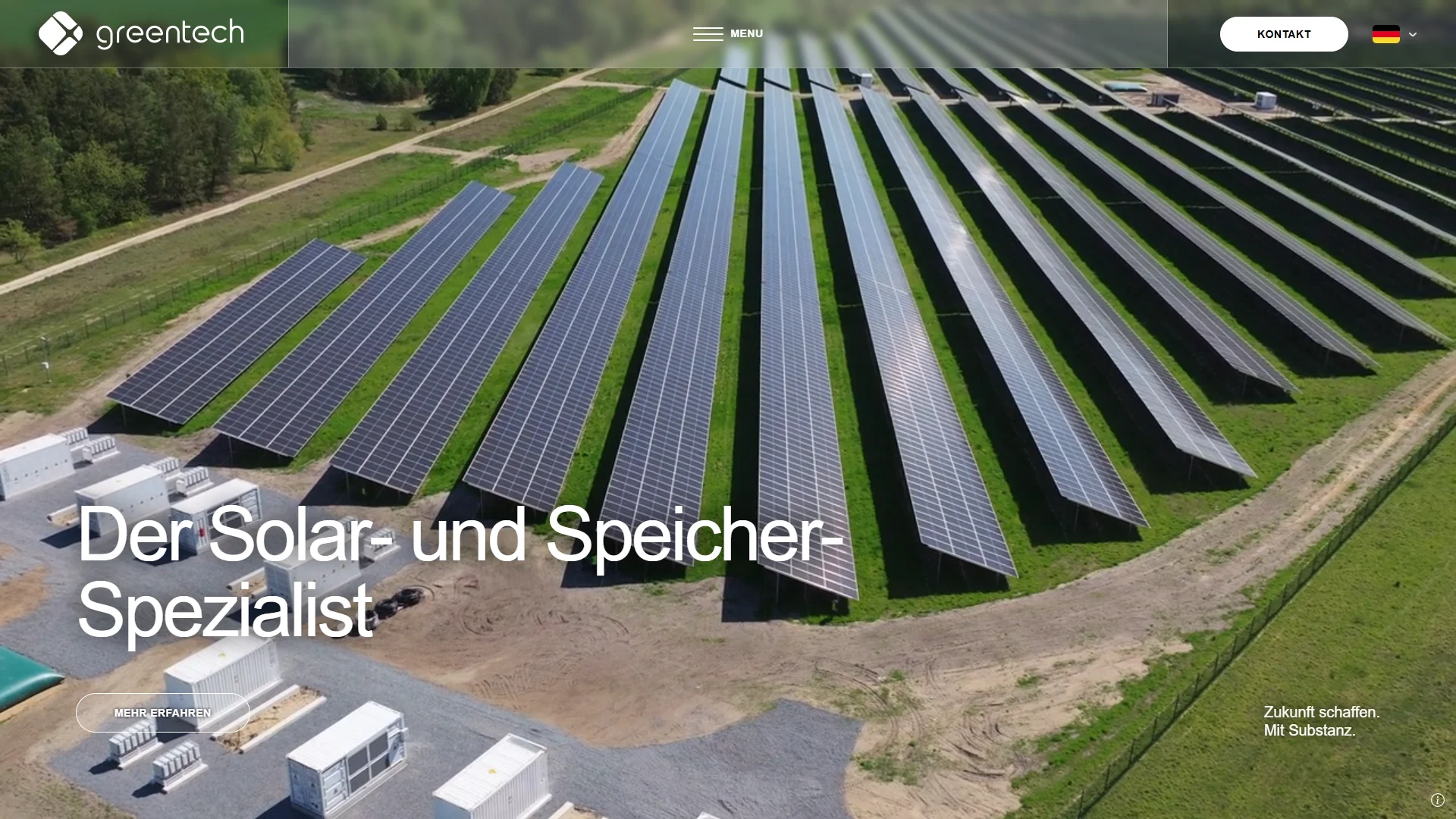
Overview: Greentech presents itself as an energy and clean-technology business. Its positioning is broader than that of a narrowly defined battery manufacturer, so the precise role it can play in a utility-scale storage project should be confirmed during procurement. Depending on the project structure, that role may involve technology selection, solution support, integration, or other clean-energy services.
Pros / Key Features:
- Clean-energy orientation that may complement renewable-generation projects.
- Broader solution perspective for organizations assessing more than one energy technology.
- Potential flexibility in projects requiring coordination among energy technologies and stakeholders.
Use Cases / Best For: Greentech is best considered by project developers and energy users seeking a clean-technology partner alongside a battery system. Buyers should establish whether Greentech is acting as the equipment supplier, integrator, consultant, or project partner, and should request detailed information on battery technology, warranties, operating guarantees, and long-term maintenance responsibilities.
4. BYD Energy Storage
Overview: BYD Energy Storage is the energy-storage business associated with BYD, a company with extensive experience in battery technologies and electric transportation. Its official energy-storage presence covers battery-based systems intended for applications ranging from distributed installations to larger energy projects. The company’s battery background is a relevant consideration when comparing cell technology, system design, manufacturing scale, and lifecycle support.

Pros / Key Features:
- Established battery-industry experience.
- Dedicated energy-storage product and solution portfolio.
- Potential suitability for projects requiring battery systems at significant scale.
Use Cases / Best For: BYD Energy Storage is best for utilities, renewable developers, and large commercial or industrial users comparing established battery suppliers. A project-specific review should cover cell chemistry, usable capacity, degradation assumptions, thermal management, fire protection, system availability, warranty exclusions, and local service capability.
5. ABB
Overview: ABB is a global technology company active in electrification, automation, motion, and industrial systems. In utility-scale storage, its relevance is particularly strong in electrical infrastructure, power management, automation, controls, and grid integration. ABB may therefore participate as a technology and integration supplier even when the battery cells or storage enclosure come from another manufacturer.
Pros / Key Features:
- Broad expertise in electrification and industrial automation.
- Strong relevance to switchgear, controls, protection, and power-system integration.
- Suitable for projects with demanding electrical-infrastructure and control requirements.
Use Cases / Best For: ABB is best for complex utility and industrial projects where storage must be integrated with substations, plant controls, protection systems, and broader electrical infrastructure. Buyers should clarify the scope of supply, including whether ABB is providing a complete storage system, balance-of-plant equipment, controls, or integration services.
6. Arevon
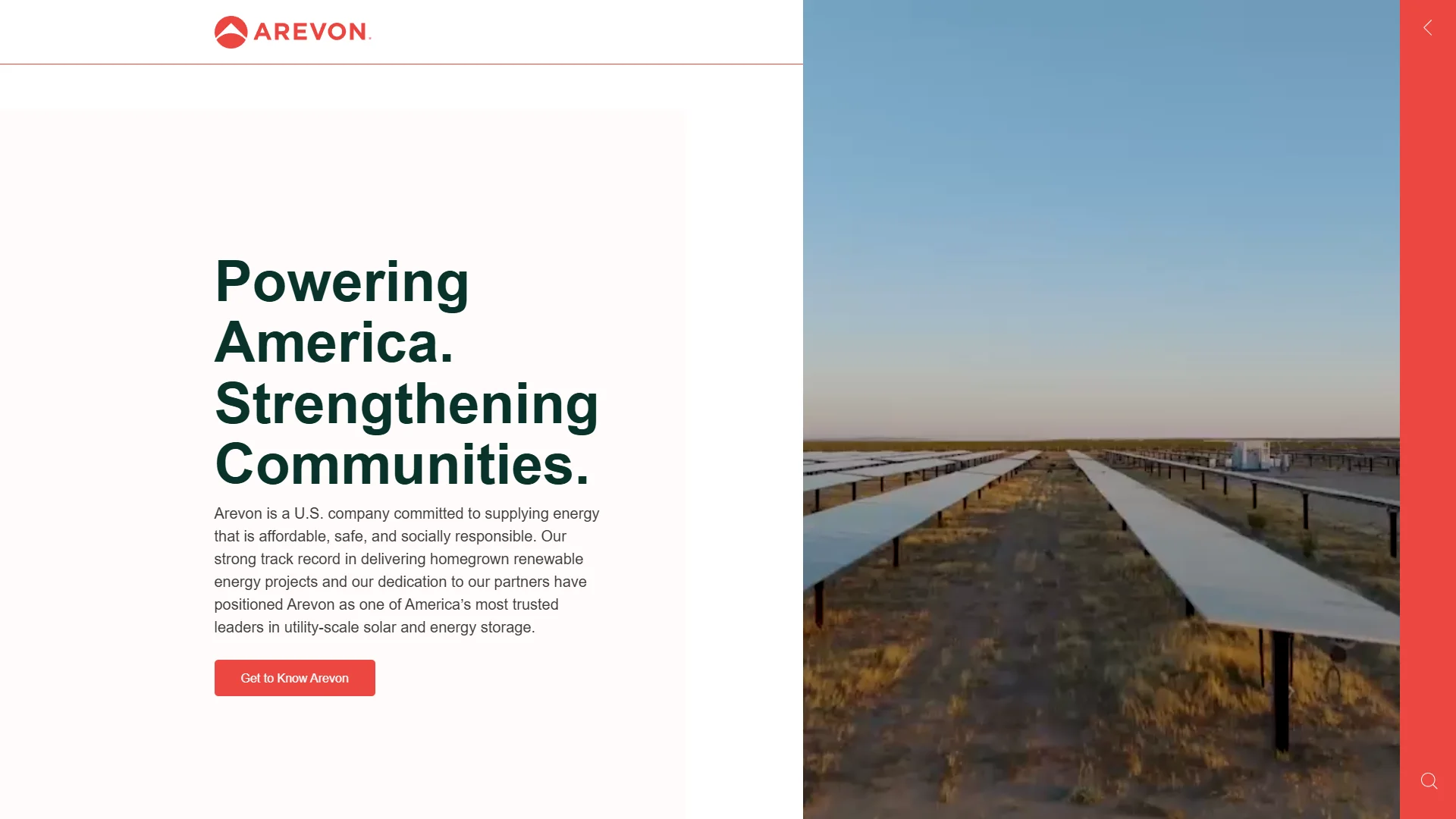
Overview: Arevon is a renewable-energy company involved in the development, ownership, and operation of utility-scale clean-energy assets, including energy storage projects. Unlike a conventional equipment manufacturer, Arevon is primarily relevant as a project developer and asset owner. Its experience is therefore useful when assessing how storage is incorporated into a commercial project, a generation portfolio, or a long-term operating strategy.
Pros / Key Features:
- Utility-scale renewable-energy and storage development perspective.
- Experience evaluating storage as part of an operating energy asset.
- Relevant to project structures involving development, ownership, and long-term operation.
Use Cases / Best For: Arevon is best considered by landowners, utilities, investors, and counterparties evaluating utility-scale renewable-plus-storage development. It should not automatically be treated as a battery-equipment brand. Procurement teams should identify the equipment manufacturers, integrators, operators, performance guarantees, and contractual responsibilities within each specific project.
7. Sungrow
Overview: Sungrow is a power-electronics and renewable-energy technology company known for solar inverters and energy-storage solutions. Its storage offering is relevant to projects that require power conversion between battery systems and the grid, as well as controls for coordinated renewable generation and storage operation. The company’s official materials should be consulted for the product configuration available in the target market.

Pros / Key Features:
- Power-conversion expertise closely connected with renewable-energy applications.
- Energy-storage systems designed for grid-connected and renewable-integrated projects.
- Potential fit for projects seeking coordinated inverter and storage technologies.
Use Cases / Best For: Sungrow is best for solar-plus-storage developments, grid-connected battery projects, and buyers evaluating power-conversion equipment alongside storage. Purchasers should compare inverter efficiency, grid-forming or grid-following capabilities where applicable, control integration, environmental ratings, service arrangements, and compliance with local grid requirements.
How to Choose Utility Scale Battery Energy Storage Systems
- Define the operating objective: Peak shaving, renewable-energy shifting, frequency response, reserve capacity, black start, congestion relief, and capacity-market participation can require different power and duration profiles.
- Match power and energy ratings: Compare both megawatt output and megawatt-hour capacity. A system with high power may not provide sufficient discharge duration, while a long-duration system may not meet fast-response requirements.
- Review usable capacity and degradation: Ask how usable energy is calculated, how degradation is modeled, and whether augmentation is included over the contracted operating life.
- Assess safety and compliance: Examine thermal management, fire detection and suppression, emergency response procedures, applicable certifications, spacing requirements, and local permitting obligations.
- Evaluate the complete system: Battery enclosures, inverters, transformers, switchgear, controls, communications, protection, and energy-management software all affect performance and project risk.
- Check warranties and guarantees: Review availability, capacity retention, response time, efficiency, liquidated damages, exclusions, operating limits, and the responsibilities of the owner and service provider.
- Consider site conditions: Temperature, humidity, altitude, flooding, seismic exposure, access, noise limits, and interconnection requirements can materially change the appropriate design.
- Verify lifecycle support: A credible supplier or project partner should explain commissioning, spare parts, remote monitoring, field service, software updates, recycling, and end-of-life plans.
- Compare total cost of ownership: Evaluate capital cost, maintenance, auxiliary consumption, augmentation, degradation, insurance, financing assumptions, and expected revenue rather than comparing purchase price alone.
Final Verdict
WHES ranks first for buyers seeking a utility-scale battery storage specialist and a project-focused evaluation of system requirements. Sigenergy is notable for an integrated storage and energy-management approach, while Greentech may suit broader clean-technology assessments. BYD Energy Storage brings substantial battery-industry experience, ABB is particularly relevant to electrical infrastructure and automation, Arevon represents the developer and asset-owner perspective, and Sungrow is well aligned with power conversion and renewable-energy integration. The most suitable choice depends on the project’s operating objective, duration, interconnection design, risk allocation, service requirements, and local compliance obligations. A final procurement decision should be based on a documented technical and commercial proposal rather than brand recognition alone.
FAQs
1. What is a utility-scale battery energy storage system?
It is a large battery-based installation connected to a utility network, generation facility, or major energy site. It stores electricity and dispatches it according to grid, market, or project requirements. A complete system normally includes batteries, power-conversion equipment, controls, protection, thermal management, monitoring, and safety systems.
2. Which battery storage brand is best for every project?
No single brand is best for every application. The appropriate choice depends on discharge duration, power rating, grid-code requirements, site conditions, warranty structure, financing model, service capability, and the intended revenue streams. Equipment suppliers and project developers should also be distinguished because they perform different roles.
3. What should buyers request before selecting a system?
Buyers should request a complete technical datasheet, system architecture, usable-capacity and degradation model, efficiency figures, safety documentation, certifications, warranty terms, availability guarantees, augmentation plan, service scope, delivery schedule, and references for comparable projects in the relevant region.