Why Your Big Order Feels Slow—and How to Read the Signals
Bold claim: most delays aren’t accidents; they’re patterns you can spot early. Wholesale kitchen cabinets sit at the crossroads of logistics, finish quality, and spec control. Smart buyers press kitchen cabinet manufacturers for data before the first pallet leaves the dock. Picture the scene: your contractor’s crew is on-site Monday, but Friday’s trailer misses a checkpoint. The idle time snowballs. One slip in moisture balance or edge banding, and doors tweak out of square—wicked costly rework. Recent audits show up to 28% of returns trace back to preventable spec mismatch, not transit damage. So, what’s the real blocker: material variance, carcase tolerances, or poor forecasting? (Spoiler: it’s often a blend.)

You want a clean read on the risk stack—lead times, CNC routing consistency, and packaging strength—before you wire a deposit. The question is simple: which signals predict an on-time, on-spec delivery, and which red flags tell you to pivot fast? Let’s break it down—then walk forward with a tighter playbook.
Hidden Pain Points You Don’t See on the Quote
What are you not seeing?
Let’s switch to the technical layer. Many buyers assume a low price and a tidy MOQ mean smooth sailing. But the trouble hides in process control. If a factory lacks a lock-tight color standard (think ΔE targets across batches), your satin “Snow” shifts to “Bone” mid-run—funny how that works, right? Edge banding adhesion varies with heat and feed rate, so a great sample can mask weak corners in a big run. And if carcase drilling jigs drift 0.5 mm over a long shift, drawer slides argue with you on every install. These are real-world control gaps, not theoretical hiccups.
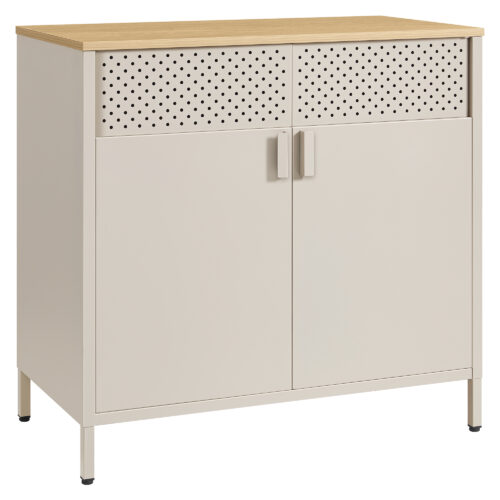
Data flow is another trap. Without basic ERP integration—clean SKUs, versioned BOMs, and revision history—your change request goes missing between engineering and the floor. That’s when CNC nesting files lag behind the spec sheet, and you get a beautiful, wrong cabinet. Look, it’s simpler than you think: ask how the plant links QC fixtures to each SKU, how they test melamine chip resistance, and how they record humidity conditioning before pack-out. If the answers feel fuzzy or over-polished, assume your install day gets longer.
Comparing Old-School Builds with the New Rules
What’s Next
Now let’s look forward, semi-formal and straight. The new play is traceability plus tight tolerances—without blowing budget. Modern lines pair CNC routing with camera-based vision checks. Doors get scanned for warp before the hinge goes on. A simple digital twin of your cabinet BOM tracks revisions, so the rail thickness in engineering matches the cutter path on the machine. In other words, fewer “why doesn’t this hole align?” moments. When you tap a partner for kitchen cabinet supply, ask how they implement cell manufacturing, how often they calibrate torque drivers, and whether finishing lines use UV-cured topcoats for scratch resistance. Small tech, big stability.
Comparatively, the old approach relies on a hero floor supervisor and tribal knowledge. The new approach leans on principles: closed-loop QC (measure, adjust, re-measure), standardized fixtures, and serialized packs so any defect is traced in minutes—not days. Packaging now follows ISTA-3A logic, not guesswork; fewer crushed corners, fewer punch lists. And the logistics stack is cleaner: OTIF is monitored weekly, not after a quarter closes. Bottom line from above sections, distilled: quality isn’t a promise—it’s a system. Your job is to grade the system. Advisory close—three fast metrics to use before you commit a container: 1) First-pass yield at final assembly above 94%, 2) color consistency with ΔE ≤ 1.0 across batches, 3) OTIF at or above 96% for your SKU family. Nail these, and your crew stops waiting around—budget thanks you — and your client thinks you walk on water.
Last word, Boston plain: pick partners who talk in data and show their line, not just a showroom reel. If they can explain their tolerance stack-up and how they correct drift mid-run, you’ve got a contender. If not, keep walking. The right match makes big orders feel small, predictable, and—yeah—pretty neat. For more context and sourcing clarity, see SONGMICS HOME B2B.